

Staffy Health Problems Explained: Skin, Joints, Allergies and Digestion

Staffordshire Bull Terriers, affectionately known as Staffies, are beloved companions known for their loyalty, playful nature, and muscular build. However, like all dog breeds, Staffies are predisposed to certain health conditions that owners should be aware of. Understanding these breed-specific health issues is crucial for providing the best care for your furry friend. This comprehensive guide explores the most common health problems in staffies, including skin conditions, allergies, joint issues, and digestive concerns, while offering practical solutions to keep your Staffordshire Bull Terrier thriving.
Introduction
Staffordshire Bull Terriers are generally hardy dogs with a life expectancy of 12 to 16 years. However, they are susceptible to specific health problems that can significantly impact their quality of life if left unaddressed. Breed-specific health awareness matters because it allows owners to recognize early warning signs, implement preventative measures, and seek timely veterinary intervention when necessary. By understanding the unique health challenges that Staffies face, you can take proactive steps to ensure your pet enjoys a long, healthy, and happy life.
The importance of breed-specific health knowledge cannot be overstated. Different dog breeds have evolved with distinct genetic predispositions, and Staffordshire Bull Terriers are no exception. Their muscular physique, genetic heritage, and physical characteristics make them prone to particular health issues that differ from other breeds. Being informed about these staffordshire bull terrier health issues empowers you to make better decisions regarding nutrition, exercise, preventative care, and when to seek professional veterinary advice.
Skin Conditions in Staffies
One of the most prevalent health problems with staffies involves their skin. Staffordshire Bull Terriers are particularly susceptible to various skin conditions that can cause discomfort, itching, and secondary infections if not properly managed.
Common Skin Problems
Staffy skin conditions often include dermatitis, mange, and fungal infections. Atopic dermatitis is especially common in the breed, characterized by chronic inflammation of the skin. This condition can be triggered by environmental factors, genetics, or a combination of both. Mange, caused by parasitic mites, is another concern that can affect Staffies, leading to hair loss, itching, and skin irritation.
Fungal infections, such as ringworm, can also affect Staffordshire Bull Terriers. These infections are not only uncomfortable for your dog but can also be contagious to other pets and humans. Additionally, bacterial skin infections can develop as secondary complications when your Staffy scratches excessively due to itching.
Causes and Symptoms
The causes of staffy skin conditions are multifaceted. Environmental allergens, such as pollen and dust mites, can trigger allergic reactions that manifest as skin problems. Food sensitivities and poor nutrition can also contribute to skin issues. Parasites, including fleas and mites, are common culprits that can cause severe itching and skin damage.
Symptoms of skin problems in Staffies include excessive scratching, licking, or biting at the skin, redness and inflammation, hair loss, scaly or flaky patches, and a distinctive odor. Some dogs may develop hot spots—areas of inflamed, infected skin that appear suddenly and can spread rapidly if not treated.
Management and Prevention Tips
Managing skin conditions in your Staffy requires a multi-faceted approach. Regular grooming helps you monitor your dog's skin health and remove potential irritants. Using a high-quality dog shampoo formulated for sensitive skin can help maintain the skin barrier and reduce irritation. Ensure your Staffy receives a balanced diet rich in omega-3 and omega-6 fatty acids, which support skin health from within.
Parasite prevention is essential—use veterinarian-recommended flea and tick prevention products year-round. Keep your dog's living environment clean and free from dust and mold. If your Staffy has environmental allergies, consider using air purifiers and washing bedding frequently. Regular veterinary check-ups allow for early detection and treatment of skin issues before they become severe.
Allergies and Digestive Health
Allergies are among the most common health problems in staffies, and they often have a direct impact on digestive health. Understanding the connection between allergies, nutrition, and gut health is crucial for managing your Staffy's overall wellness.
Food and Environmental Allergies
Staffordshire Bull Terriers can develop both food and environmental allergies. Food allergies in Staffies commonly involve proteins such as beef, chicken, and dairy, though any ingredient can potentially trigger an allergic response. Environmental allergies may be triggered by pollen, dust mites, mold spores, or other airborne irritants.
The symptoms of allergies in Staffies can be subtle or severe. Common signs include itching and scratching, particularly around the face, ears, and paws, chronic ear infections, gastrointestinal upset, and skin inflammation. Some dogs may experience respiratory symptoms or eye irritation as well.
Signs of Allergic Reactions
Recognizing allergic reactions early is important for preventing complications. Acute allergic reactions may include facial swelling, hives, vomiting, or diarrhea. Chronic allergies typically manifest as persistent itching, recurrent ear infections, and ongoing digestive issues. If your Staffy shows signs of an allergic reaction, consult your veterinarian promptly for proper diagnosis and treatment.
Role of Gut Health and Nutrition
The gut health of your Staffy plays a pivotal role in overall wellness and immune function. A healthy digestive system helps prevent food sensitivities, supports nutrient absorption, and strengthens the immune system's ability to fight off infections and manage allergies. Poor gut health can exacerbate allergic reactions and lead to chronic digestive problems.
Nutrition is fundamental to maintaining optimal gut health in Staffies. A high-quality diet with appropriate protein levels, healthy fats, and digestible carbohydrates supports digestive function. Avoiding common allergens and artificial additives can help reduce the risk of allergic reactions and digestive upset.
Benefits of Prebiotics and Probiotics for Dogs
Prebiotics and probiotics for dogs have gained significant recognition for their role in supporting digestive health and immune function. Probiotics are beneficial bacteria that colonize the gut and help maintain a healthy microbiome. Prebiotics are dietary fibers that feed these beneficial bacteria, promoting their growth and activity.
For Staffies prone to allergies and digestive issues, incorporating prebiotics and probiotics for dogs into their diet can be transformative. These supplements help restore and maintain a balanced gut microbiome, which is essential for proper digestion, nutrient absorption, and immune regulation. A healthy gut microbiome can reduce the severity of allergic reactions and improve overall digestive comfort.
Joint Health and Mobility
Joint health is another critical concern for Staffordshire Bull Terriers. Their muscular build and active nature put considerable stress on their joints, making them susceptible to various joint-related issues.
Joint Issues Common in the Breed
Hip dysplasia and elbow dysplasia are genetic conditions that can affect Staffies, leading to joint instability and arthritis. These conditions develop when the hip or elbow joint doesn't fit together properly, causing abnormal wear and tear. Osteoarthritis can develop as a secondary condition, particularly as dogs age.
Patellar luxation, where the kneecap dislocates from its normal position, can also affect Staffordshire Bull Terriers. This condition can range from mild to severe and may require surgical intervention in some cases.
Importance of Early Care
Early intervention and preventative care are crucial for maintaining joint health in Staffies. Maintaining a healthy weight reduces stress on the joints and can significantly slow the progression of joint disease. Regular, moderate exercise appropriate for your dog's age and fitness level helps maintain muscle strength, which supports joint stability.
Avoiding excessive jumping, running on hard surfaces, and other high-impact activities during puppyhood can help prevent joint damage. Providing orthopedic bedding and ensuring your Staffy has easy access to elevated food and water bowls can reduce strain on the joints.
Supplements and Lifestyle Support
Joint health for dogs can be significantly supported through targeted supplementation. Glucosamine and chondroitin are well-researched supplements that support cartilage health and joint function. Omega-3 fatty acids have anti-inflammatory properties that can help reduce joint pain and stiffness.
Breed-specific supplements designed for joint support can provide comprehensive nutrition tailored to the needs of Staffordshire Bull Terriers. These supplements often combine multiple beneficial ingredients to support cartilage health, reduce inflammation, and maintain mobility as your dog ages.
Preventative Care and Nutrition
Preventative care is the cornerstone of maintaining your Staffy's health and preventing the development or progression of breed-specific health issues.
Breed-Specific Supplement Solutions
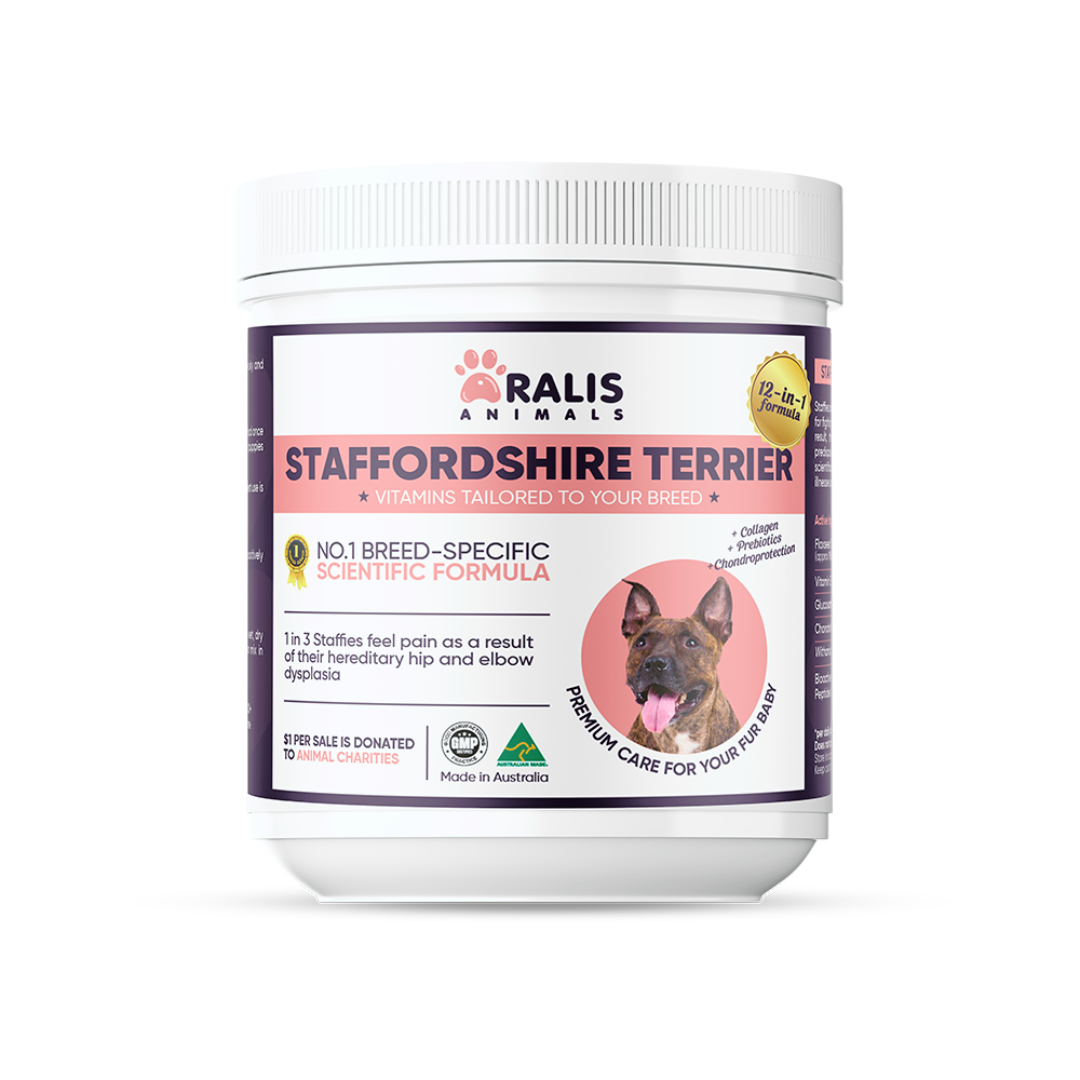
Aralis Animals offers breed-specific supplements designed to address the unique health needs of Staffordshire Bull Terriers. These tailored solutions provide targeted nutrition to support skin health, digestive function, joint mobility, and overall wellness. By choosing supplements specifically formulated for Staffies, you ensure that your dog receives the optimal balance of nutrients needed to thrive. Help your Staffy stay active and comfortable here.
Dietary Considerations for Optimal Health
Feeding your Staffy a high-quality, balanced diet is fundamental to preventing health problems. Look for dog foods with high-quality protein sources, healthy fats, and minimal artificial additives. Consider your dog's individual needs, including any known food sensitivities or allergies.
Incorporating whole foods such as lean meats, fish, vegetables, and fruits can supplement commercial dog food and provide additional nutrients. Always introduce new foods gradually to avoid digestive upset. Consult with your veterinarian or a canine nutritionist to develop a feeding plan tailored to your Staffy's specific health needs.
When to Consult a Veterinarian
Regular veterinary check-ups are essential for monitoring your Staffy's health and catching potential issues early. Schedule annual wellness exams, and more frequently as your dog ages. Seek veterinary attention if you notice changes in your dog's behavior, appetite, coat condition, or mobility. If your Staffy shows signs of allergies, digestive issues, or joint problems, consult your veterinarian promptly for proper diagnosis and treatment recommendations.
Conclusion
Understanding the common health problems in staffies is essential for providing excellent care for your beloved companion. Staffordshire Bull Terriers are prone to skin conditions, allergies, joint issues, and digestive problems, but with proper knowledge and preventative care, many of these issues can be managed effectively or prevented altogether.
By prioritizing staffy wellness through proper nutrition, targeted supplementation, regular exercise, and preventative veterinary care, you can help your Staffordshire Bull Terrier live a long, healthy, and happy life. Aralis Animals is committed to supporting your efforts by providing breed-specific supplements designed to address the unique health needs of your Staffy.
Take action today to elevate your pet's health. Explore Aralis Animals' tailored supplement solutions specifically formulated for Staffordshire Bull Terriers and discover how the right nutrition can make a meaningful difference in your dog's quality of life. Your Staffy deserves the best care possible, and with the right approach, you can help them thrive for years to come.