

Pug Puppies: Building Strong Foundations with the Right Nutrients

Bringing a pug puppy into your home is an exciting and rewarding experience. These adorable, compact companions with their distinctive wrinkled faces and playful personalities quickly become beloved family members. However, ensuring your pug puppy grows into a healthy, vibrant adult requires more than just love and attention—it demands proper nutrition. The foundation you build during your puppy's early months will significantly impact their long-term health, energy levels, and overall quality of life. This comprehensive guide explores how the right nutrients and supplements can help your pug puppy thrive during these critical developmental years.
Understanding Pug Puppy Nutritional Needs
Pug puppies have unique nutritional requirements that differ from adult dogs and other breeds. During the first year of life, puppies experience rapid growth and development, requiring substantially more calories and specific nutrients than their adult counterparts. Understanding these needs is the first step toward providing optimal nutrition.
Growth Stages and Caloric Requirements
Pug puppies typically go through several distinct growth phases. From birth to three weeks, puppies rely entirely on their mother's milk for nutrition. Once weaned, usually around three to four weeks, they begin transitioning to solid food. This transition period is crucial, as puppies need to develop their digestive systems while receiving adequate nutrition.
Between four weeks and three months, pug puppies experience their most rapid growth phase. During this time, they require approximately three to four meals per day, with each meal containing high-quality puppy food formulated specifically for small breeds. Caloric needs are proportionally higher for small breed puppies like pugs compared to larger breeds, as they have faster metabolic rates.
From three to six months, puppies can transition to two to three meals daily, and from six months onward, most pugs can move to two meals per day. However, the nutritional density of their food remains critical throughout the first year.
Key Nutrients for Healthy Development
Pug puppies require a balanced array of nutrients to support their development. Protein is essential for building muscle tissue and supporting immune function. High-quality animal-based proteins should comprise the foundation of your puppy's diet. Fat is equally important, providing concentrated energy and supporting brain development and coat health.
Calcium and phosphorus work together to build strong bones and teeth, with the ratio between these minerals being particularly important for proper skeletal development. Carbohydrates provide energy and fiber for digestive health. Additionally, various vitamins and minerals support everything from vision to immune function to proper enzyme activity throughout the body.
Essential Vitamins and Supplements for Pug Puppies
While a high-quality puppy food provides the foundation for good nutrition, supplements can fill nutritional gaps and address breed-specific concerns that pug puppies may face.
Puppy Multivitamins Overview
A comprehensive puppy multivitamin serves as nutritional insurance, ensuring your pug receives all essential vitamins and minerals even if their regular diet has minor deficiencies. The best puppy vitamins contain a balanced blend of B vitamins for energy metabolism, vitamin A for vision and immune function, vitamin D for calcium absorption, and vitamin E as an antioxidant.
Mineral supplementation is equally important. A quality daily multivitamin for dogs should include zinc for immune function and skin health, copper for bone development, and iron for oxygen transport in the blood. For pug puppies specifically, these supplements should be formulated for small breed dogs, with appropriate dosages that account for their smaller body size.
Breed-Specific Considerations for Pugs
Pugs have several breed-specific health considerations that make targeted supplementation particularly valuable. Their brachycephalic (flat-faced) structure can predispose them to respiratory issues, making antioxidant-rich supplements beneficial. Additionally, pugs are prone to joint problems later in life, making early supplementation with joint-supporting nutrients like glucosamine and chondroitin worthwhile.
Pug puppies also tend toward eye issues, including dry eye and corneal ulcers. Supplements containing omega-3 fatty acids and lutein can support ocular health from an early age. Their compact size also means they're prone to dental issues, making calcium and phosphorus supplementation particularly important for strong tooth development.
Important Micronutrients Explained
Beyond basic vitamins and minerals, several micronutrients deserve special attention for pug puppies. Omega-3 and omega-6 fatty acids support brain development, reduce inflammation, and promote healthy skin and coat. These essential fatty acids cannot be synthesized by the body and must come from diet or supplements.
Probiotics support digestive health and immune function by promoting beneficial gut bacteria. Many pug puppies experience digestive sensitivity, making probiotic supplementation particularly beneficial. Antioxidants like vitamins C and E protect cells from damage and support immune function during the critical developmental period.
Choosing the Best Puppy Vitamins
With countless options available, selecting the right supplements for your pug puppy can feel overwhelming. Understanding what to look for helps ensure you're making an informed decision.
What to Look for in Quality Supplements
The best multivitamin for dogs comes from reputable manufacturers who conduct third-party testing and maintain transparent ingredient lists. Look for products specifically formulated for puppies, as adult formulations may contain inappropriate nutrient levels for developing dogs.
Check the ingredient list carefully. High-quality supplements list specific nutrient sources rather than vague terms like "mineral complex." For example, look for "zinc proteinate" rather than just "zinc." The supplement should be formulated for small breed puppies, ensuring appropriate dosages for your pug's size.
Bioavailability matters significantly. Some nutrient forms are absorbed more efficiently than others. Chelated minerals, for instance, are more readily absorbed than non-chelated forms. Reading reviews from other pug owners and consulting with your veterinarian can provide valuable insights into which dog vitamin supplements have proven effective.
Avoiding Common Pitfalls
One common mistake is over-supplementation. More is not always better, and excessive supplementation can actually harm your puppy's development. For example, too much calcium can interfere with proper bone development, while excessive vitamin A can cause toxicity.
Avoid supplements with artificial colors, flavors, or preservatives. Natural preservation methods are preferable, and many puppies have sensitivities to artificial additives. Be cautious of supplements making exaggerated health claims or promising to cure specific conditions—legitimate supplements support health but don't replace veterinary care.
Daily Multivitamin and Supplement Routine
Establishing a consistent supplementation routine ensures your pug puppy receives maximum benefit from their vitamins and supplements.
Recommended Dosages and Integration
Always follow the manufacturer's dosage recommendations, which should be based on your puppy's weight and age. Most puppy multivitamins are formulated to be given daily, often mixed into food for easier administration. Some puppies readily accept supplements mixed into their regular meals, while others may require the supplement to be given separately.
Timing can affect absorption. Some vitamins are fat-soluble and absorb better with meals containing fat, while others are water-soluble and can be given anytime. Reading the supplement's instructions ensures optimal absorption and effectiveness.
Consistency and Monitoring
Consistency is crucial for supplements to be effective. Establish a daily routine, perhaps giving supplements at the same time each day with meals. This consistency helps you remember to administer them and allows your puppy's body to develop a regular pattern.
Monitor your puppy's response to supplementation. Within a few weeks, you should notice improvements in coat quality, energy levels, and overall vitality. Keep records of your puppy's health, growth, and any changes you observe. This information proves valuable during veterinary checkups.
Aralis Animals Solutions
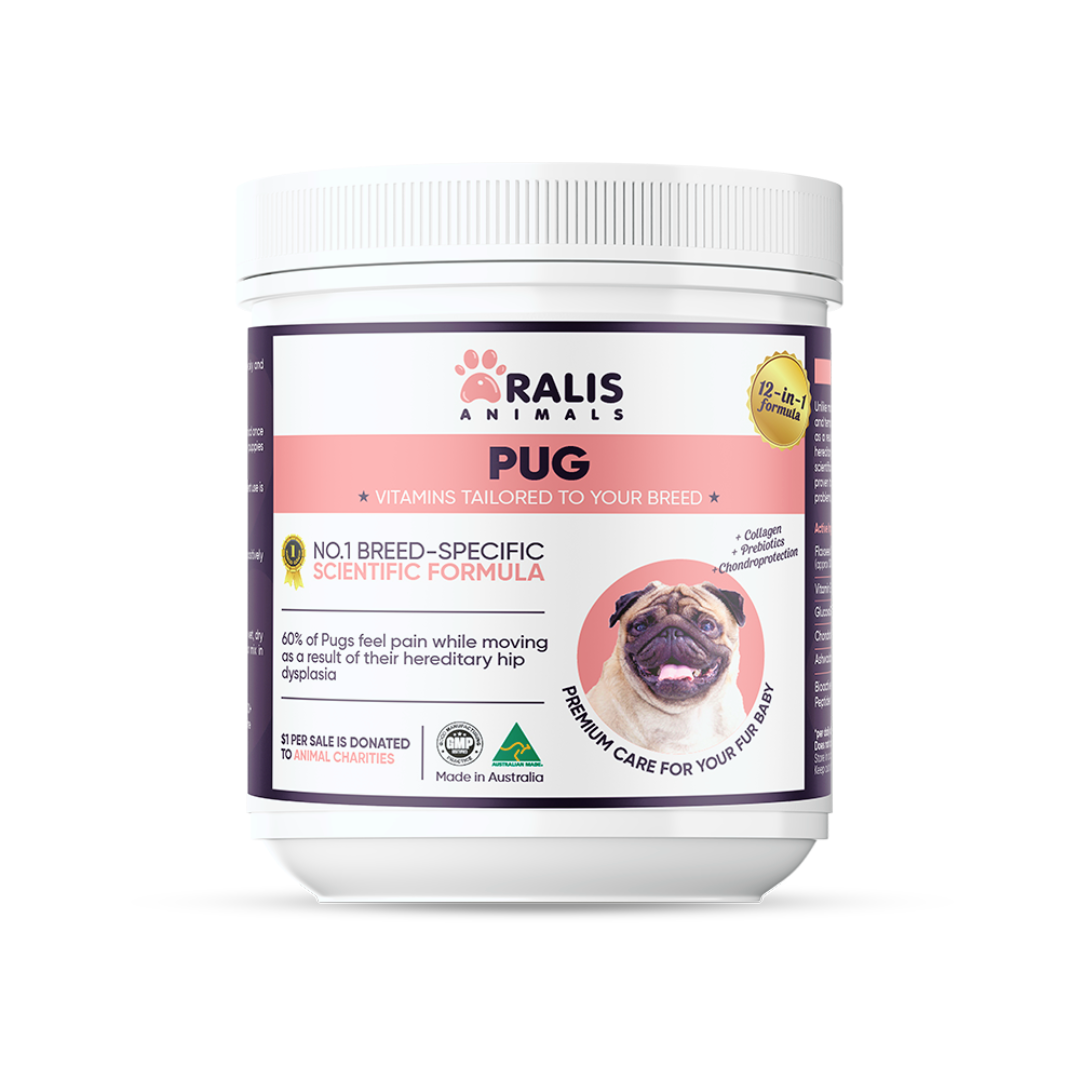
At Aralis Animals, we understand that every pug puppy is unique, with specific nutritional needs based on their individual health profile and breed characteristics. Our breed-specific supplements are formulated with pug puppies in mind, addressing the particular health concerns and nutritional requirements that make this breed special.
Our Aralis Animals Pug Multivitamins are specially formulated to support your puppy's healthy development with Glucosamine, Chondroitin, and Collagen for growing joints, Saccharomyces boulardii to support digestive and immune health, and Flaxseed Meal, Vitamin E, and Zinc Diglycinate to help maintain healthy skin and a glossy coat. Explore our Pug Multivitamins here.
Common Questions Answered
When Should You Start Supplements?
Most veterinarians recommend beginning supplementation once puppies transition to solid food, typically around four weeks of age. However, always consult with your veterinarian before starting any supplementation program, as individual puppies may have specific needs or health considerations.
Signs of Nutritional Deficiency
Watch for signs that your puppy may not be receiving adequate nutrition. Poor coat quality, lethargy, slow growth, weak bones, or frequent infections can indicate nutritional deficiencies. If you notice any concerning symptoms, consult your veterinarian promptly.
Conclusion
Building strong foundations during your pug puppy's first year sets the stage for a long, healthy, and vibrant life. Proper nutrition, supported by high-quality supplements when needed, provides the essential building blocks for healthy growth and development. By understanding your pug puppy's unique nutritional needs and providing appropriate vitamins and supplements, you're making one of the most important investments in their future health.
The journey of raising a pug puppy is filled with joy and responsibility. Choosing to prioritize their nutritional needs demonstrates your commitment to their wellbeing. Explore Aralis Animals breed-specific supplement solutions today and give your pug puppy the nutritional foundation they deserve for a healthy, happy life ahead.