

American Staffy Health Problems: Common Issues Every Owner Should Know

American Staffordshire Terriers, affectionately known as Staffies, are powerful, loyal, and loving companions that have captured the hearts of dog owners worldwide. These muscular and athletic dogs are known for their unwavering devotion to their families and their playful, energetic nature. However, like all dog breeds, American Staffordshire Terriers are prone to certain health issues that every responsible owner should be aware of. Understanding these common health problems is crucial for providing your beloved staffy with the best possible care and ensuring they live a long, healthy, and happy life.
Common Skin Issues in American Staffordshire Terriers
One of the most prevalent health concerns affecting American Staffordshire Terriers is skin problems. Staffies are particularly susceptible to various skin conditions that can cause discomfort and distress if left untreated.
Allergies and Dermatitis
Allergies are among the most common skin issues in the American staffordshire terrier dog breed. These allergies can be triggered by environmental factors such as pollen, dust mites, or mold, as well as food sensitivities. When a staffy develops allergies, they often experience itching, redness, and inflammation of the skin. Allergic dermatitis can lead to secondary infections if the dog excessively scratches or licks the affected areas.
Food allergies are particularly common in Staffies, with chicken, beef, and wheat being frequent culprits. If you notice your American staffy constantly scratching, licking their paws, or developing red patches on their skin, it may be time to consult with your veterinarian about potential allergies. Your vet may recommend an elimination diet to identify the specific allergen causing the problem.
Mange and Fungal Infections
Mange is another significant concern for American staffordshire terrier health issues. There are two types of mange: demodectic and sarcoptic. Demodectic mange is caused by a mite that lives on the dog's skin and is often related to a weakened immune system. Sarcoptic mange, on the other hand, is highly contagious and causes intense itching and discomfort.
Fungal infections, such as ringworm, are also common in Staffies and can spread to other pets and even humans. These infections typically appear as circular patches of hair loss and may be accompanied by scaling or crusting of the skin. Regular grooming, maintaining a clean living environment, and prompt veterinary treatment are essential for managing these conditions.
Prevention and Care Tips
To minimize skin issues in your American staffy, maintain a regular grooming routine that includes brushing their coat several times a week. This helps remove dead hair and improves circulation to the skin. Bathe your staffy with a high-quality, gentle dog shampoo designed for sensitive skin, and ensure their living environment is clean and dry. A healthy diet rich in omega-3 and omega-6 fatty acids can also support skin health and reduce inflammation.
Joint and Bone Health Concerns
Joint and bone health is another critical area of concern for American staffordshire terrier dog breed owners. These muscular dogs place significant stress on their skeletal system, making them vulnerable to various orthopedic problems.
Hip Dysplasia and Arthritis
Hip dysplasia is a genetic condition where the hip joint doesn't develop properly, leading to instability and eventual arthritis. This condition is relatively common in larger dog breeds, including American Staffordshire Terriers. Dogs with hip dysplasia may experience pain, lameness, and difficulty moving, particularly after exercise or rest.
Arthritis often develops as a secondary condition following hip dysplasia or as a result of aging. Arthritic joints become stiff and painful, which can significantly impact your staffy's quality of life. Early detection through regular veterinary checkups and appropriate management can help slow the progression of these conditions.
Elbow Problems
Elbow dysplasia is another orthopedic concern that affects American Staffordshire Terriers. This condition involves abnormal development of the elbow joint and can lead to pain, lameness, and arthritis. Dogs with elbow dysplasia may be reluctant to use their front legs or may develop an abnormal gait.
Exercise and Weight Management
Maintaining proper joint health for dogs requires careful attention to exercise and weight management. While Staffies are active and energetic dogs that require regular exercise, excessive or high-impact activities can strain their joints. Provide moderate, consistent exercise such as daily walks and controlled play sessions. Additionally, keeping your American staffy at a healthy weight is crucial, as excess weight places additional stress on joints and can accelerate the development of joint problems.
Respiratory and Heart Conditions
Health problems with staffies extend to their cardiovascular and respiratory systems, which require careful monitoring throughout their lives.
Breathing Difficulties
Some American Staffordshire Terriers may experience breathing difficulties due to their muscular build and sometimes shortened muzzles. Conditions such as stenotic nares (narrowed nostrils) or elongated soft palate can restrict airflow and cause labored breathing, particularly during exercise or in hot weather.
Heart Disease Prevalence
Heart disease is a significant concern in the American staffordshire terrier breed. Conditions such as dilated cardiomyopathy and aortic stenosis can develop without obvious symptoms in the early stages. Regular cardiac checkups, including echocardiograms, can help detect heart problems before they become severe.
Warning Signs to Watch For
Be alert to warning signs of respiratory or cardiac issues, including excessive panting, difficulty breathing, letharness, reluctance to exercise, coughing, and fainting episodes. If you notice any of these symptoms, contact your veterinarian immediately for a thorough evaluation.
Other Notable Health Concerns
Beyond the major health issues already discussed, American Staffordshire Terriers are susceptible to several other conditions that deserve attention.
Ear Infections
Staffies can be prone to ear infections due to their ear structure. Regular ear cleaning and prompt treatment of any signs of infection, such as redness, odor, or discharge, can prevent complications.
Bloat and Digestive Issues
Bloat, or gastric dilatation-volvulus, is a serious and potentially life-threatening condition that can affect deep-chested dogs like American Staffordshire Terriers. This condition occurs when the stomach fills with gas and twists, cutting off blood supply. Feeding smaller, more frequent meals and avoiding vigorous exercise immediately after eating can help reduce the risk.
Hereditary Conditions
Some American Staffordshire Terriers may inherit genetic conditions such as cerebellar ataxia or hereditary cataracts. Working with reputable breeders who conduct health testing can help reduce the incidence of these hereditary problems.
Preventative Care Measures
Taking a proactive approach to your staffy's health is one of the best ways to ensure they live a long and healthy life.
Regular Veterinary Checkups
Schedule regular veterinary checkups at least once a year, or more frequently as your dog ages. These visits allow your veterinarian to monitor your staffy's health, catch potential problems early, and provide preventative care recommendations.
Proper Nutrition and Supplements
A high-quality diet tailored to your American staffy's specific needs is fundamental to their health. Consider incorporating breed-specific supplements that support joint health, skin condition, and overall wellness. Supplements containing glucosamine, chondroitin, and omega-3 fatty acids can be particularly beneficial for maintaining joint health and supporting skin condition.
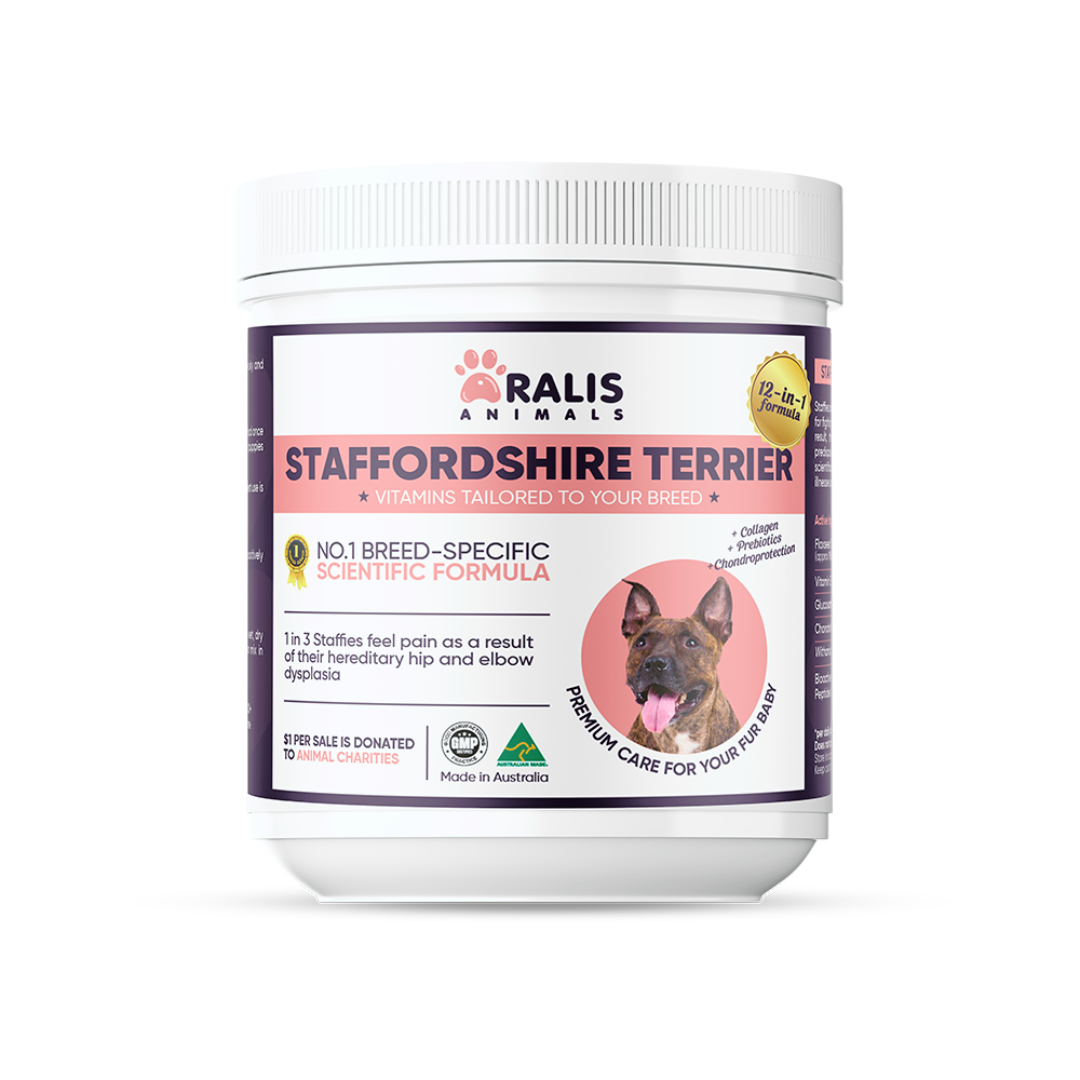
Staffies are well known for their tendency towards skin allergies and irritation, which is why supporting skin health from within is so important. Our Aralis Animals American Staffordshire Terrier multivitamins combine Flaxseed Meal, Vitamin E, Zinc Diglycinate, and Saccharomyces boulardii to help maintain a healthy skin barrier, support gut health, and promote a healthy immune response. With added Ashwagandha to support wellbeing, it's a simple daily way to help sensitive Staffies feel more comfortable—explore support for healthy skin and happier paws here.
Exercise and Lifestyle Management
Provide your staffy with appropriate exercise and mental stimulation to keep them physically fit and mentally engaged. A healthy lifestyle supports overall wellness and can help prevent or delay the onset of age-related health issues.
Breed-Specific Solutions with Aralis Animals
Understanding the unique health needs of American Staffordshire Terriers is essential for providing optimal care. Aralis Animals recognizes that each dog breed has specific health requirements and vulnerabilities. By offering breed-specific supplements tailored to the American staffy's particular needs, Aralis Animals helps owners elevate their pet's health and address common concerns proactively.
These specialized supplements are formulated to support the areas where Staffies are most vulnerable, including joint health, skin condition, and overall vitality. By choosing breed-specific solutions, you're taking a targeted approach to your staffy's wellness that goes beyond generic pet supplements.
Conclusion
American Staffordshire Terriers are wonderful companions that bring joy and loyalty to their families. However, as an owner, it's crucial to be aware of the health problems that commonly affect this breed. From skin issues and joint problems to respiratory and cardiac concerns, understanding these potential health challenges allows you to take proactive steps to protect your beloved staffy.
By maintaining regular veterinary checkups, providing proper nutrition and exercise, and considering breed-specific supplements, you can significantly improve your American staffy's quality of life and help them avoid or manage health issues more effectively. Remember that early detection and intervention are key to addressing health problems before they become serious. With dedication to preventative care and a commitment to understanding your staffy's unique health needs, you can ensure that your loyal companion enjoys many happy and healthy years by your side.